Window tint changes how your car looks, feels, and holds up over the years. The trouble is, not all film is created equal, and the gap between bargain tint and premium ceramic is wider than most owners realize. Cheap window tint vs premium tint really comes down to what each one is made of, how long it lasts, and what it actually protects. This article walks Colorado Springs drivers through the real differences, the reasons we keep coming back to XPEL, and what makes sense for the kind of vehicles we see in the shop every week.

Key Takeaways
- Cheap dyed tint fades, turns purple, and bubbles within a few years.
- Premium ceramic film rejects heat, blocks UV, and holds its color for the life of the vehicle.
- XPEL PRIME XR PLUS rejects up to 98% of infrared heat and blocks over 99% of UV rays.
- The Skin Cancer Foundation recommends quality window film as part of sun protection.
- Colorado’s high-altitude sun is harder on tint than most owners think.
- Professional installation matters as much as the film itself.
Table of Contents
- Why Window Tint Is a Bigger Deal in Colorado Springs Than You Think
- Cheap Window Tint vs Premium Tint: What’s Actually Different
- What You Pay For With Premium Window Film
- Why We Recommend XPEL
- Colorado Tint Laws and the Pikes Peak Sun
- When “Saving Money” Costs You More
- Conclusion
- Frequently Asked Questions
- Additional Resources
Why Window Tint Is a Bigger Deal in Colorado Springs Than You Think
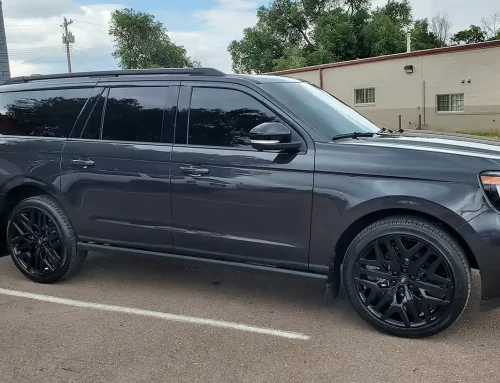
If you live anywhere from Briargate to Flying Horse, you already know what the sun does to a parked car here. Drive down Powers Boulevard on a July afternoon and you can almost see the heat coming off the asphalt. Park a black SUV at the Promenade Shops at Briargate for an hour, and the inside turns into an oven. The drive back to Wolf Ranch or Cordera is miserable, and your steering wheel is hot enough to leave a mark.
Colorado Springs sits over 6,000 feet above sea level. That altitude gives us thinner air, brighter days, and more ultraviolet exposure than just about anywhere else in the country. The sun here doesn’t just heat your cabin. It bleaches dashboards, cracks leather, and ages skin a lot faster than people realize.
Good window film changes that. It blocks heat, knocks down glare, and gives the inside of your car a real shot at looking new five years from now. The wrong film, though, can be worse than no film at all. That’s where the choice between cheap window tint vs premium tint starts to matter.
Cheap Window Tint vs Premium Tint: What’s Actually Different
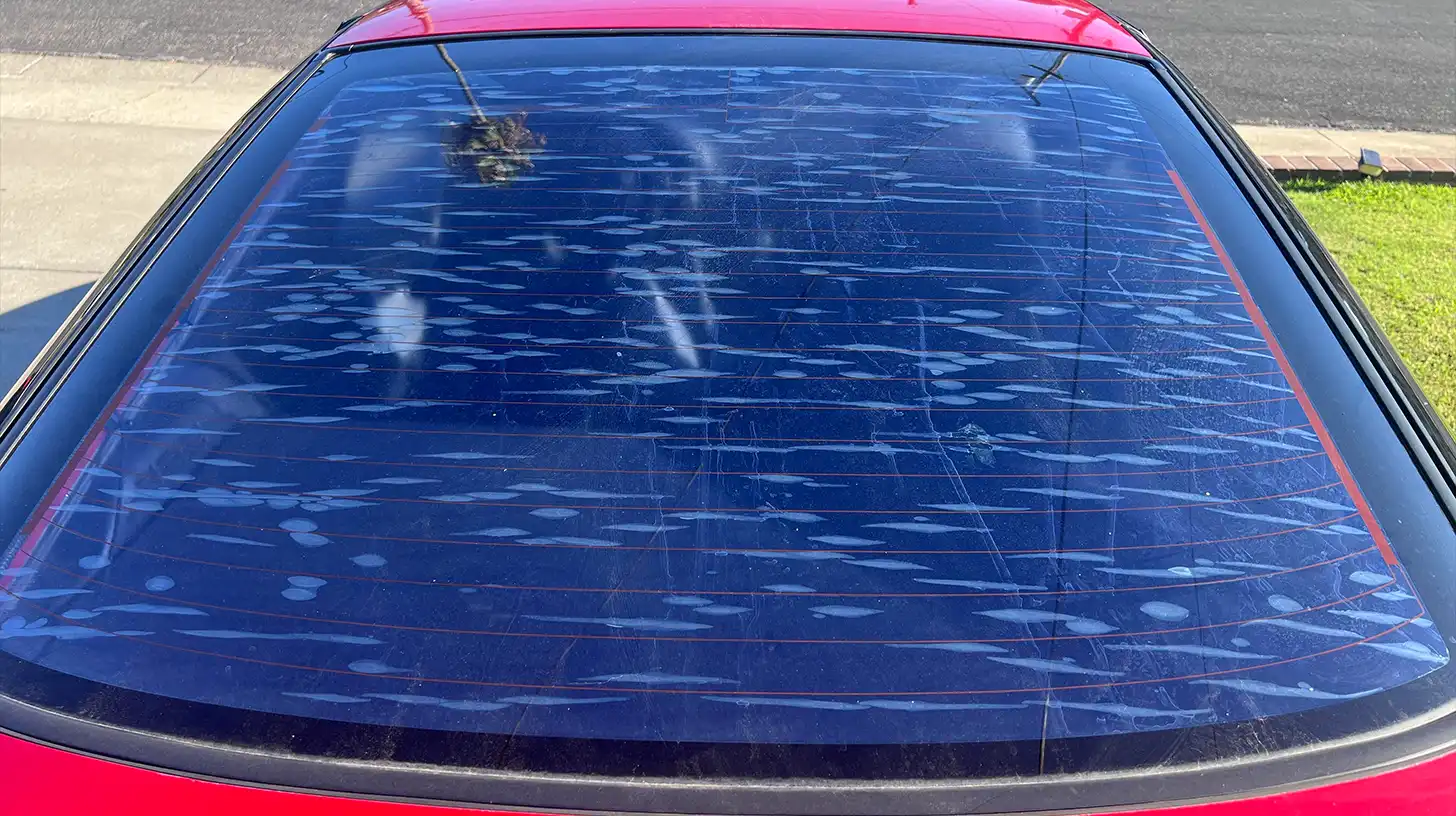
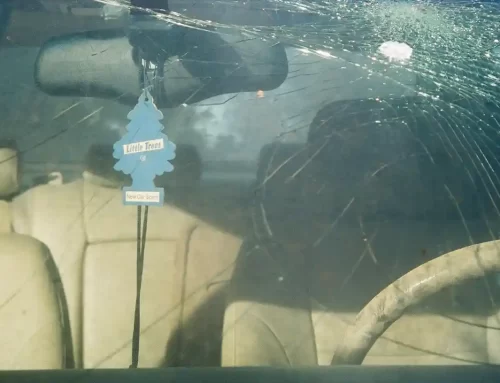
The film you see on most low-cost tint jobs is dyed polyester. It’s inexpensive to make, easy to install, and looks fine the day it goes on. The problem is what happens after a couple of Colorado summers. Dyed film breaks down under UV. It fades. It turns that telltale shade of purple you see all over town. Edges start to lift. Bubbles form in the middle of the window. The privacy you paid for goes away, and the look you wanted goes with it.
Premium tint is built differently. The top-tier films use nano-ceramic particles instead of dye. Ceramic tint doesn’t fade. It doesn’t interfere with cell signals, GPS, or keyless entry. It blocks a huge percentage of infrared heat without forcing you into a limo-dark shade. That’s the real story behind cheap window tint vs premium tint, and it’s the reason owners who buy nice cars stop shopping by price after their first bad tint job.
You can usually spot the difference before you ever drive the car out of the bay. Premium film looks crisp on the glass. The edges are tucked tight. There’s no haze, no orange-peel texture, no dust caught between the film and the window.
What You Pay For With Premium Window Film
Premium window film does four things that cheap film simply cannot.
It rejects heat. The best ceramic films block up to 98% of infrared heat, which is the part of the sun you actually feel on your arm when you’re driving. That changes how comfortable the cabin is and how hard your air conditioning has to work to keep it that way.
It blocks UV. Quality ceramic film blocks over 99% of ultraviolet radiation. The Skin Cancer Foundation has been clear that UVA rays pass right through ordinary window glass and reach you at home and in your car, which is why daily commuters carry a real risk of premature aging and skin damage. If you drive every morning from Monument or Falcon down to a job in town, that’s a lot of cumulative exposure on your left arm and the left side of your face.
It holds its color. Premium ceramic film stays the shade you picked when you bought it. No purple. No fading. No looking different on one window because that one got tinted a year later.
It comes with a real warranty. Top brands stand behind their products with lifetime warranties, often transferable to the next owner. Cheap film almost never does.
The other piece of this, and people forget it, is the install itself. A great film installed badly is a bad job. A premium film installed well by a careful technician is something you stop noticing because it just works.
Why We Recommend XPEL
We’ve worked with several premium film brands, but the one we trust most for our clients is XPEL. Their PRIME XR PLUS line is the best ceramic window film we’ve ever installed.
The numbers are honest. XPEL PRIME XR PLUS rejects up to 98% of infrared heat and provides what they call SPF 1,000 protection, blocking more than 99% of UV rays. It uses multi-layer nano-ceramic construction, which means no metal layers to mess with your cell signal, GPS, or Bluetooth. The film is optically clear, so nighttime visibility doesn’t take the hit you’d expect from a darker tint.
The warranty is the part most owners overlook until they need it. XPEL backs PRIME XR PLUS with a lifetime, transferable warranty. If something happens to the film during the life of the vehicle, it’s covered. If you sell the car, the warranty goes with it. That’s not common in our industry, and it tells you something about how the company feels about its own product.
“I came across the shops website and put in a request looking into some options of a ceramic coating and redoing the window tint on my truck. The following morning I had an email from OJ with a breakdown of the options/services that they provide. I brought the truck in for a consult/drop off. Rick and I were able walk through the parking lot looking at different options for both the tint and ceramic coating. We ended up going with a XR Plus tint all around and a 5 year ceramic coating.” Zach B.
XPEL also carries the Skin Cancer Foundation Seal of Recommendation for its PRIME line, which is a meaningful endorsement. The Foundation only awards that seal to films that block 99 percent or more of solar UVA and UVB.
For the kind of vehicles we work on every week—paint correction clients, ceramic coating clients, paint protection film clients—XPEL is the choice that matches the quality of the rest of the work.
Colorado Tint Laws and the Pikes Peak Sun

Colorado tint law is specific, and it’s enforced. Non-reflective film is allowed only on the top four inches of the windshield, and that strip has to let through at least 70% visible light. Front side windows have to allow more than 27% VLT. Back side windows and the rear window have the same 27% rule on sedans. SUVs, vans, and trucks get more leeway on the rear side and back glass.
That means you can’t legally go as dark on the front of your daily driver as some owners want. The good news is that with premium ceramic film, you don’t have to. A 35% or 50% ceramic tint will block more heat than a 5% dyed film, while staying inside the law and keeping your nighttime visibility intact.
Up here in the northeast end of town, between Pine Creek, Northgate, and the Air Force Academy gates, the sun comes in at angles that make poor-quality film look terrible fast. A quality install means you can actually enjoy the front-range views on the drive to the Western Museum of Mining and Industry or up to Palmer Lake, without squinting your way through it.
Further Reading: What is the darkest legal tint in Colorado? Avoid The Ticket
When “Saving Money” Costs You More
Here’s the part we tell many owners who walks into the shop trying to decide between cheap window tint vs premium tint.
A bargain tint job might run a couple hundred dollars. It’ll look fine for a year, maybe two. Then the bubbling starts. The purple shows up. The film starts peeling at the edges of the rear window. Now you’re paying to have the bad film stripped, the glass cleaned, and new film installed. Strip jobs are not cheap. Stuck-on adhesive is VERY time-consuming to remove without damaging the defroster lines on your rear glass, and a careful technician is going to charge accordingly.
So now you’ve paid for tint twice, and you still don’t have premium film on the car. If you’d started with a quality install, you’d already be done.
The other cost is the one nobody itemizes. Faded film looks bad on a nice car. It signals neglect. It can drag the resale value of a vehicle in a way no detail job fully fixes until the film is off. For owners of Audis, BMWs, Porsches, Range Rovers, Teslas, and the rest of the cars we see every week, the difference between a clean ceramic tint and a peeling dyed film is the difference between a car that looks taken care of and one that doesn’t.
Further Reading: Window Tint Colorado Springs Prices | Cheap is Expensive
Conclusion
The choice between cheap window tint vs premium tint isn’t really about the sticker price. It’s about whether you want a film that does its job for the life of the car, or one you’ll regret in eighteen months. If you love your car, if you want to keep it for the long haul, if you want it to look right every time you walk up to it, premium ceramic film is the move. And among premium films, XPEL is at the top of our list for a reason.
Springs Detailing has been doing high-end work in Colorado Springs for years. We treat window tint the same way we treat paint correction, ceramic coatings, and paint protection film—as something worth doing right the first time, by people who actually care how it turns out.
Ready to See Your Car the Way It Was Meant to Look?
Call Springs Detailing or stop by our shops in Colorado Springs to talk through your window tint options. Every install includes a front-to-back inspection by our manager before you drive away, and we’ll help you pick the right XPEL film for your vehicle, your daily routine, and the way you actually drive. Request an estimate today, because the right tint, done right, is one of the best things you can do for a car you love.
Frequently Asked Questions
How long does premium window tint last compared to cheap tint?
Quality ceramic window film like XPEL PRIME XR PLUS is built to last the life of the vehicle and is backed by a lifetime transferable warranty. Cheap dyed film typically starts showing problems within two to five years, including fading, purple discoloration, bubbling, and peeling at the edges.
Will ceramic window tint interfere with my car’s electronics?
No. Premium ceramic films use nano-ceramic particles rather than the metallic layers found in older or cheaper films. That means no interference with your cell phone, GPS, satellite radio, Bluetooth, keyless entry, or tire pressure sensors. That’s one of the practical reasons we steer our clients away from metallized tints, especially on newer vehicles loaded with electronics.
What’s the darkest tint I can legally have in Colorado?
For sedans, the front side windows have to allow more than 27% VLT, and the same applies to back side and rear windows on a sedan. SUVs, vans, and trucks can go darker on the rear side and rear windows. The top four inches of the windshield can be tinted with non-reflective film. Reflective, mirrored, red, and amber tints are not legal in Colorado.
Does premium tint really block heat, or is that just marketing?
It really does. XPEL PRIME XR PLUS blocks up to 98% of infrared heat, which is the part of the sun’s energy you actually feel as warmth. That translates to noticeably cooler cabin temperatures, especially on the cloudless summer afternoons we get out toward Falcon and Black Forest.
Is window tint worth it on a leased vehicle?
Yes, especially with premium film. Quality ceramic tint protects the interior from sun damage that can show up on a lease-return inspection, and a well-installed film can be removed cleanly at the end of the lease without damage to the glass. Cheap film, on the other hand, can leave residue behind and even damage defroster lines when it’s removed.