Paint protection film is one of the smartest investments a Colorado Springs driver can make—but only if you choose the right one. The gap between cheap PPF vs premium PPF isn’t a small step up. It’s two different products doing two different jobs. In this article, we’ll walk through what actually separates budget film from the good stuff, why XPEL is the standard we trust on every car that rolls into our bay, and how the wrong choice can cost you more than just the price of replacing it. If you love your car and you want it to still look loved five and ten years from now, this one is for you.

Key Takeaways
- Cheap PPF and premium PPF aren’t different price points of the same product. They are different products with very different lifespans, finishes, and outcomes.
- Budget films often yellow, peel, or stain within a few years, while a premium film like XPEL Ultimate Plus carries a 10-year manufacturer warranty.
- Self-healing technology—the feature that makes light scratches and swirl marks vanish with heat—is the dividing line between premium and budget film.
- Installation quality matters as much as the film itself. The wrong installer can ruin even the best material.
- For Colorado Springs drivers, the cost of replacing failed cheap PPF (and the paint damage hiding underneath) almost always exceeds the cost of doing it right the first time.
Table of Contents
- The Real Cost of “Saving” Money on PPF
- What Actually Separates Cheap PPF from Premium PPF
- Why XPEL Sets the Standard
- What Cheap Film Costs You on Colorado Springs Roads
- The Installer Matters as Much as the Film
- When Premium Pays for Itself
The Real Cost of “Saving” Money on PPF
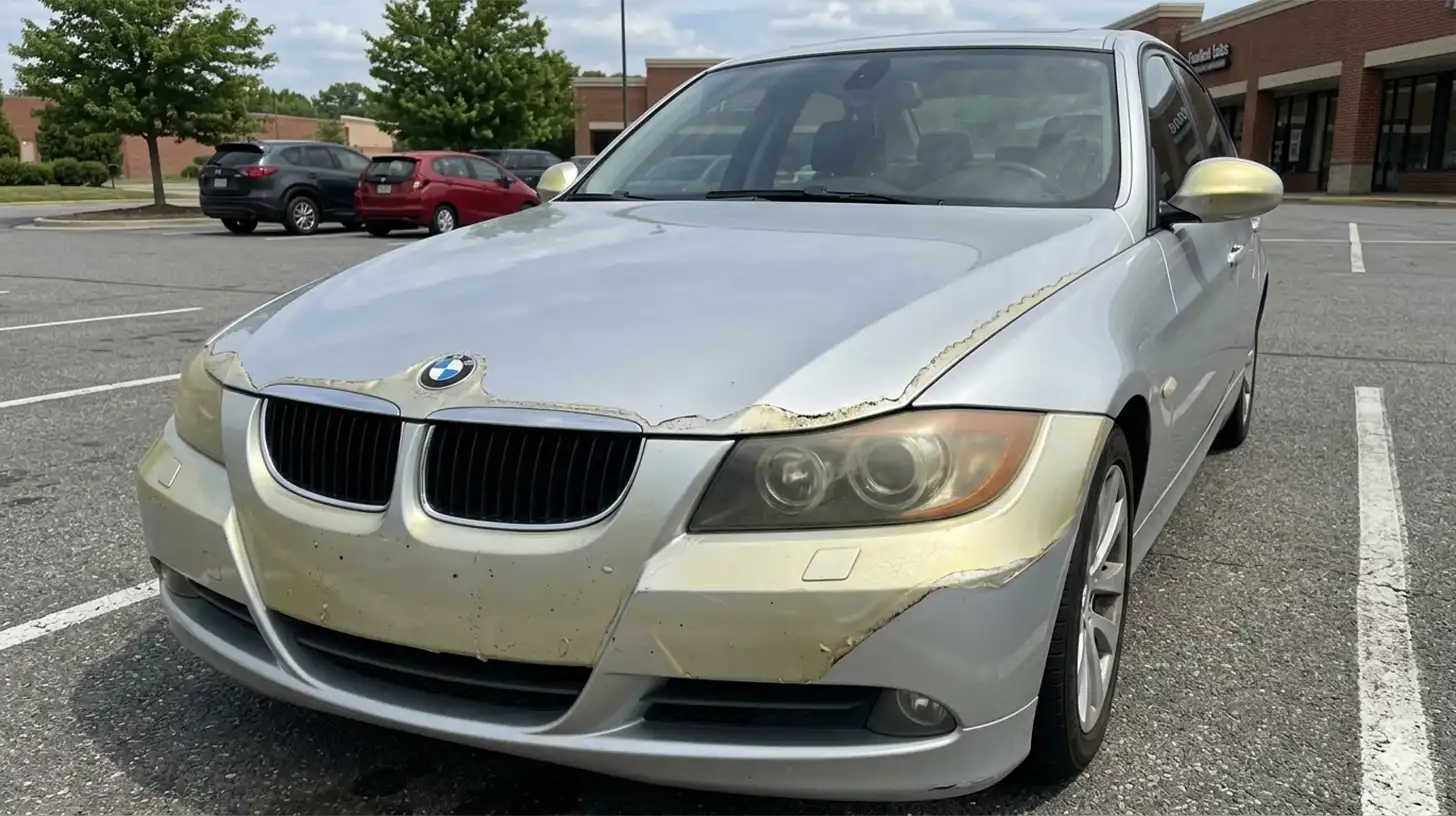
I’ve been working on luxury cars for over twenty years, first at dealerships and now at our shops here in Colorado Springs. In that time, I’ve seen plenty of folks come through the door with the same story: “I had film put on a couple years ago at a cheaper place, and now look at it.” Yellowing on the hood. Edges lifting near the bumper. A haze across the headlights. The film failed, but worse than that, the paint underneath sometimes failed with it, because the cheap adhesive didn’t release cleanly when it came time to remove it.
That’s the part of the cheap PPF vs premium PPF conversation that doesn’t get talked about enough. The sticker price is only part of the math. When the budget film gives up two or three years in, you’re not just paying to replace it. You may be paying to fix the paint it was supposed to be protecting. According to Kelley Blue Book, repainting an aging sedan can cost around $3,000, and that number climbs fast for SUVs, trucks, and luxury vehicles.
So when someone tells me they want to “save money” with a budget film, I gently tell them the truth: cheap is rarely cheap by the time you finish paying for it.
What Actually Separates Cheap PPF from Premium
The film world is crowded these days. There are dozens of brands, and a lot of them look similar when they’re rolled out flat. The differences show up over time, in the sun, on the road, and especially under the harsh UV of our Front Range elevation.
Here’s what actually matters when you compare cheap PPF vs premium PPF:
Self-healing topcoat. Premium film has a clear topcoat made from elastomeric polyurethane that closes up minor scratches and swirl marks when warmed by the sun, hot water, or a heat gun. Budget films either don’t have this or have a watered-down version that doesn’t perform.
UV stability. Cheaper films yellow. The clear film you put on a white or silver car at install can turn the color of weak tea inside three years. Premium PPF holds its clarity for the full life of the film.
Adhesive quality. Bargain adhesives bond too aggressively or too weakly. Either way, removal is a nightmare. Premium adhesives stay put under stress and release cleanly when the film is eventually replaced—leaving your factory paint exactly the way it was the day we wrapped it.
Edge sealing and conformability. Cheap film fights you at the contours. Edges lift early. Premium film stretches around mirrors, fenders, and bumper sweeps without protest, and the edges stay sealed.
The difference isn’t marketing. It’s chemistry, manufacturing, and quality control. And it shows up the moment the seasons start cycling.
Why XPEL Sets the Standard

We’ve worked with most of the big names in this industry. We landed on XPEL because it earned its place. XPEL Ultimate Plus is 8 mil thick, which gives it real substance against rock chips coming off the gravel trucks on I-25. The clear topcoat is engineered to repair light scratches and swirls when heat is applied. And critically, the film is backed by a 10-year warranty against yellowing, cracking, peeling, staining, and hazing—a warranty that’s transferable if you ever sell the car.
That last detail matters more than people realize. If you sell your truck three years into the film’s life, that protection follows the next owner, which can quietly help your resale conversation.
There’s also the practical side. After you drive home from a weekend up Highway 24 to Woodland Park or down to Cripple Creek, you’re going to find road grime, bug residue, maybe some pine sap if you parked under a tree. Premium film cleans up easily and doesn’t stain. Budget film can hold onto that stuff and hold it for good.
Suggested Reading: XPEL vs 3M Paint Protection Film: Which is Best?
What Cheap Film Costs You
Living here is a gift. Driving here is a different conversation. Between the gravel they put down for winter ice, the construction along Powers and Academy, the rock-pelting climbs up Pikes Peak Highway, and the long sun-bleached summers, our cars take a beating that flatlanders never have to think about.
Case in point. My webmaster, Justin, recently purchased a Lexus GS350 F-Sport from a local dealer. Unfortunately, said dealer already added cheap PPF to his car, and within a couple weeks, yes a couple weeks, it already started peeling. Now he has to have it removed (hopefully it doesn’t mess up the paint, too) and get proper Paint Protection Film instead. See below:
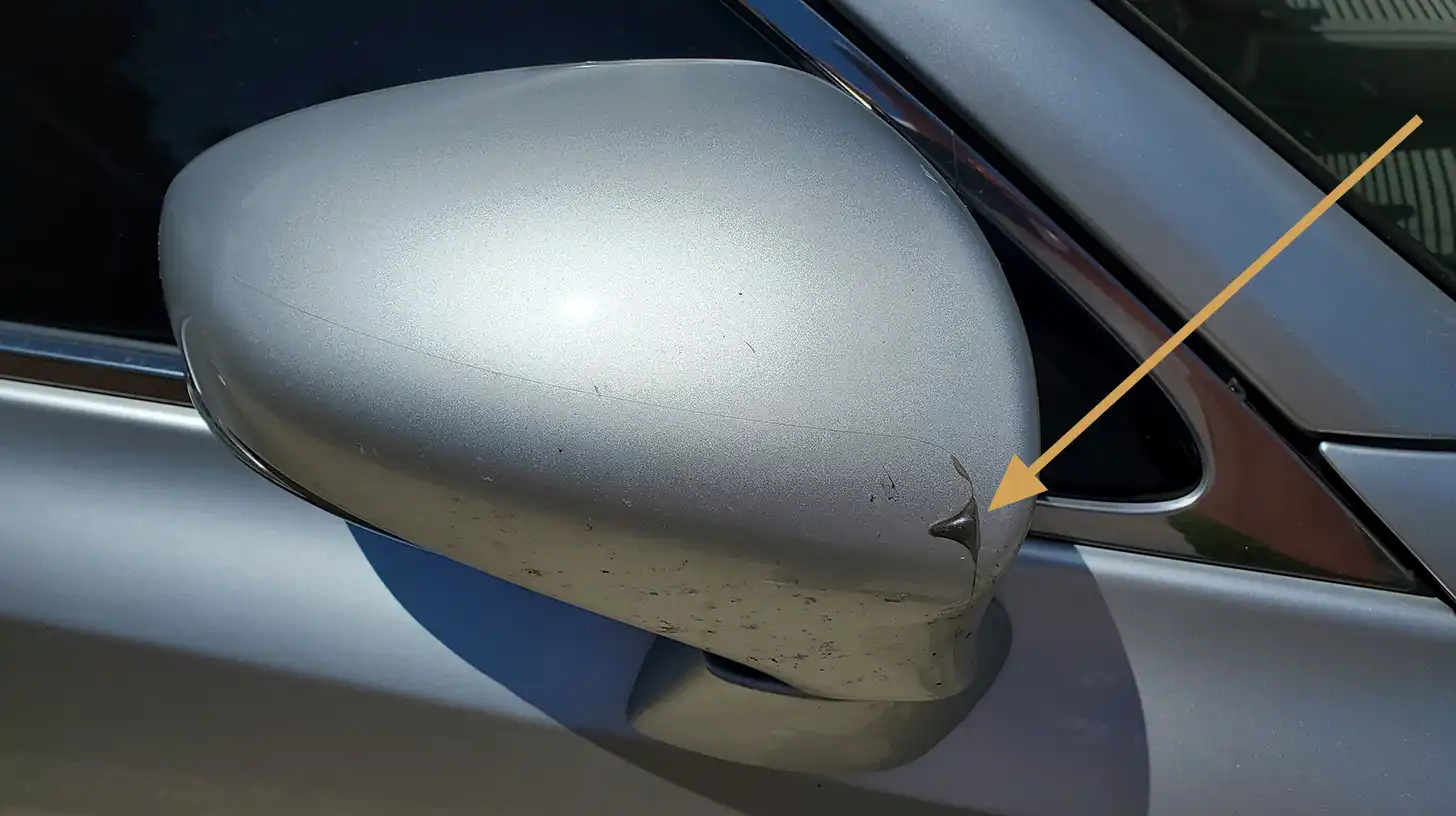
Cheap PPF was not engineered for this environment. It was engineered for a price point. There’s a difference. The UV alone at our elevation will fade and yellow lower-grade film faster than it would in a coastal city. The temperature swings—40-degree mornings to 80-degree afternoons in the spring—stress the adhesive. And rock chips coming off I-25 between Monument and downtown will punch right through thinner films that don’t have the elasticity to absorb the impact.
We have customers from all over—the Broadmoor, Old North End, Black Forest, Falcon, all the way up to Monument. The roads they drive are not the same, but the demands they place on a film are remarkably similar. Premium PPF holds up. Cheap film starts apologizing within the first eighteen months.
The Installer Matters as Much as the Film
I want to say this plainly because it’s something a lot of shops won’t tell you: the best film in the world, installed badly, will fail. And mid-grade film, installed by a craftsman who cares, will outperform a premium product slapped on by someone learning on your hood.
When we install XPEL at Springs Detailing, the car gets a full decontamination first. We clay it, we wash it, we make sure not a single particle is sitting on the paint when the film goes down. Wherever possible, we wrap edges so there’s no visible cut line. We use vehicle-specific patterns when they’re available, and we hand-cut where we have to. Then a manager inspects the entire vehicle, top to bottom, before it goes home.
That last step is something I won’t compromise on. Every car gets a final walk-through. Always has, always will. It’s the difference between a film job and a finished piece of work.
When you’re vetting an installer, ask to see real installations they’ve done (not just stock photos), and ask how they handle warranty claims. A quality shop stands behind their work without flinching.
“Vehicle turned out better than expectations! This is the first time I used Springs detailing. I wanted a full front PPF and ceramic coating. The car looks brand new. They are friendly and professional. They take their work seriously and I appreciate the eye for detail! 10/10 recommend.” Jessica C.
When Premium Pays for Itself

Here’s the simple math we walk customers through:
A high-quality paint protection film package on the front end of a vehicle is a meaningful investment. So is a full-front or full-vehicle wrap. But the alternative—repainting a hood, fender, or bumper after a few years of rock chips—runs deep into thousands of dollars. Matching factory paint on a luxury car is rarely seamless even when you spend more.
Now factor in the second-order benefits. Your car looks newer, longer. Resale value is protected. The film carries its own warranty. And every time someone hands you a compliment in the parking lot at Garden of the Gods or in line for coffee in Old Colorado City, you remember why you took care of it in the first place.
That, to me, is what makes premium PPF a quiet luxury. Not the badge or the brand name—but the way it lets you stop worrying about the car and just enjoy driving it.
Conclusion
The choice between cheap PPF and premium PPF comes down to whether you want a temporary cosmetic fix or genuine, long-term protection for the vehicle you’ve worked hard for. Budget film looks like savings on the invoice and reveals itself as an expense later. Premium film, installed correctly, gives you a decade of peace of mind. We’ve staked our reputation on doing it right, and we’ve staked it specifically on XPEL because it has earned that trust over years of real-world Colorado driving.
If you’re ready to protect your car the way it deserves to be protected—and you want it done by a shop that inspects every vehicle before it leaves the bay—come see us. Schedule a free PPF consultation at Springs Detailing today, or call our team to talk through the right package for your vehicle. Your car’s best years are still ahead. Let’s keep it looking that way.
Frequently Asked Questions
How long does premium PPF actually last?
A quality professional installation of XPEL Ultimate Plus is built to perform for around a decade, and the manufacturer notes that PPF generally lasts five to ten years depending on the film’s quality, the install, and the conditions it lives in. Cheap PPF tends to fall on the short end of that range or fail well before it.
Will PPF damage my factory paint when it’s removed?
Not when it’s premium PPF and it’s removed by a trained installer. Quality films like XPEL are designed to release cleanly and leave the original paint intact. The risk of paint damage during removal is mostly tied to cheap adhesives or improper technique, which is one more reason the brand and the installer both matter.
Is ceramic coating a substitute for PPF?
No, and we tell our customers this often. Ceramic coating is a chemical layer that adds gloss, hydrophobic properties, and protection against light contaminants and UV. It does not stop rock chips. PPF is a physical layer of urethane that absorbs impact. Many of our clients run XPEL underneath a ceramic coating to get the best of both worlds—physical impact protection and easier maintenance.
Further Reading: Ceramic Coating vs PPF: Which Paint Protection is Best?
Should I get full-front PPF or full-vehicle coverage?
It depends on how you drive and where. If most of your miles are around town in Briargate, Cordera, or downtown, a quality front-end package usually covers the high-impact zones. If you regularly head up I-25, drive Highway 24 to the mountains, or take long trips, full-vehicle coverage is worth a serious conversation. We’re happy to walk you through both options based on your actual driving life.
Can I tell the difference between cheap PPF and premium PPF just by looking?
On day one, sometimes not. After a year in the Colorado sun, almost always. Premium PPF stays clear, lays flat at the edges, and continues to self-heal minor marks. Cheap PPF starts to yellow, lift, or stain. By the time the difference is visible, the cheaper choice has often already cost more than the premium one would have.
Additional Resources
- XPEL Ultimate Plus Product Page — manufacturer specifications, warranty details, and installation information for the film we trust.
- Kelley Blue Book: How Much Does It Cost to Paint a Car? — current 2025 pricing context for repaint costs and why prevention pays.
- AAA: How Much Does It Cost to Paint a Car? — independent breakdown of paint job tiers and what drives the price.